Targeted Pain Relief Massage for Muscle Soreness
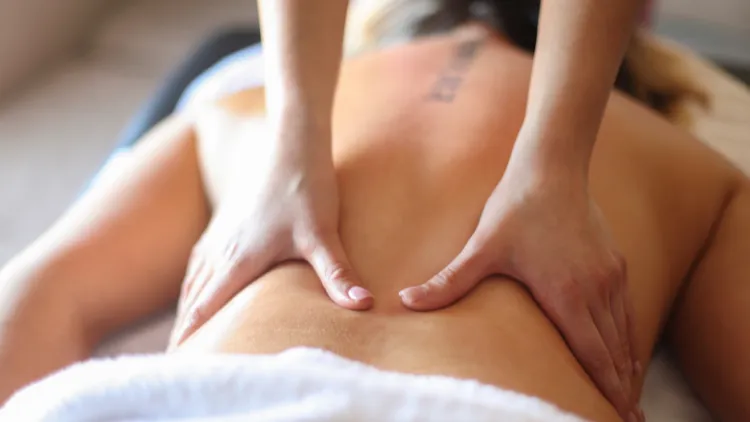
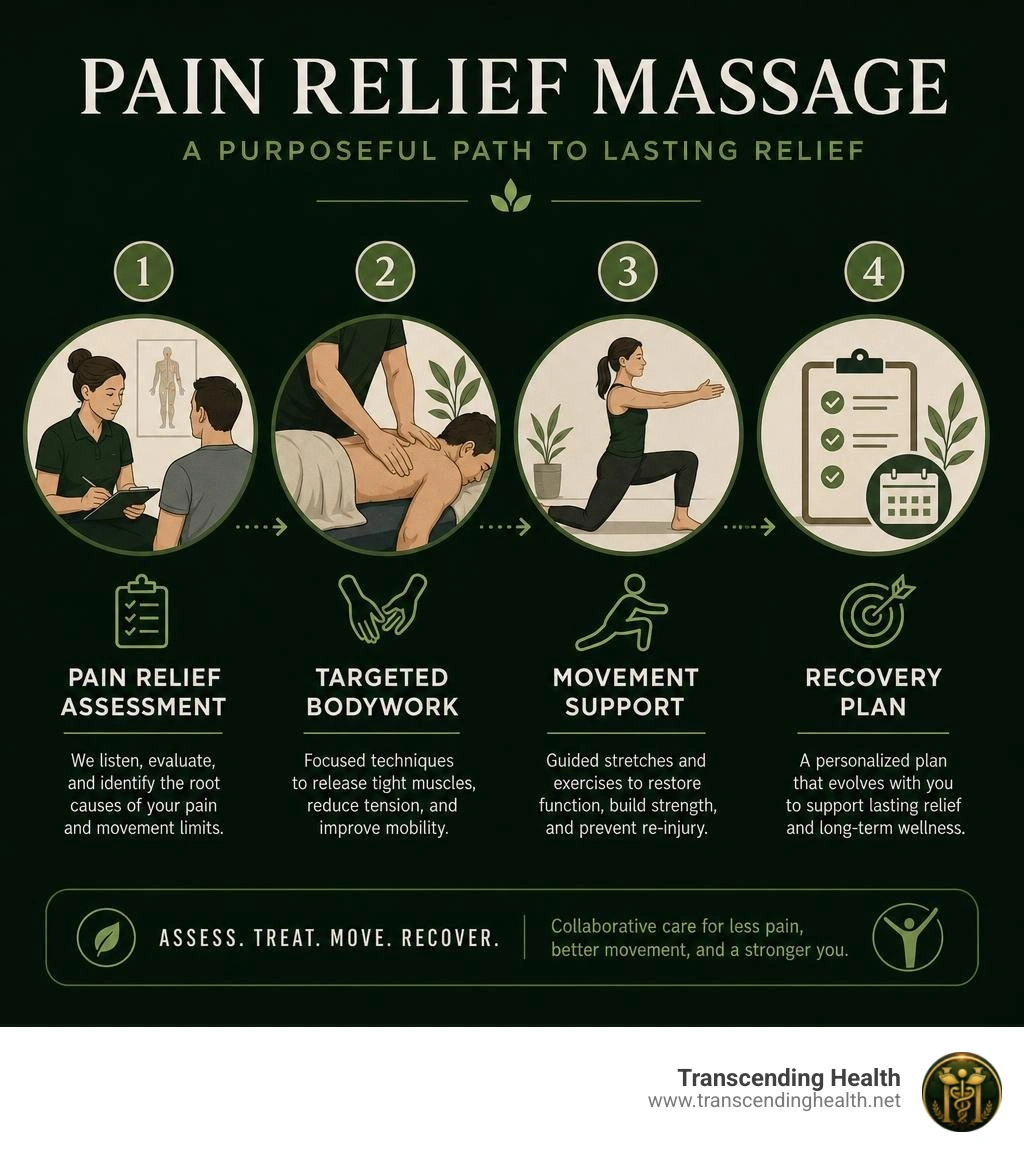
Pain relief massage is a focused, hands-on treatment for sore, tight, or overworked muscles. It goes beyond relaxation. A therapist checks the painful area, uses pressure that fits your comfort level, and works on the muscle and connective tissue patterns that may be limiting your movement.
For ongoing back, shoulder, knee, or post-injury soreness, look for care that includes:
- A clear conversation about your pain, activity, health history, and goals.
- Targeted techniques such as deep tissue work, trigger point therapy, or myofascial release.
- A plan that combines massage with movement, corrective exercise, and other appropriate care.
Massage may ease muscle guarding (protective tightening) and improve mobility. It can also calm a nervous system that is overreacting to pain. You should never have to push through sharp or overwhelming pain.
Research on chronic neck pain offers one example. It found that 60-minute therapeutic sessions two or three times weekly for four weeks worked better than shorter or less frequent massage.
At Transcending Health in Charlottesville, VA, we provide integrative, in-person care at 1445 Rio Road East, Suite 201 F, Charlottesville, VA 22901. You can reach our clinic at 434-465-2905. When they fit your goals, we can pair pain relief massage with corrective exercise, acupuncture, laser, cryotherapy, and acoustic wave therapy (also called shockwave).
I am Drew Edmondson, owner of Transcending Health. I help build coordinated recovery plans that pair pain relief massage with hands-on therapy, movement support, and advanced recovery tools. Below are the massage approaches that can help you move with less soreness and more confidence.
6 Proven Modalities for Pain Relief Massage
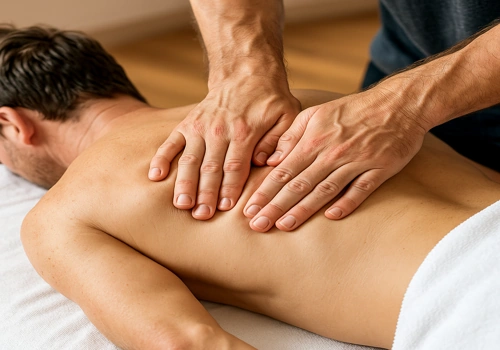
No single technique fixes every case of lasting muscle soreness. Your body is a connected system of muscle fibers, dense fascia, fluid channels, and nerves. Choosing the right technique lets us target the exact tissue layer that is limiting movement or sending pain signals to your spinal cord.
Your discomfort might come from a sudden sports injury or months of posture stress. Either way, hands-on techniques can unwind tight tissue, break up stubborn adhesions (spots where tissue layers stick together), and reduce soreness.
| Modality | Primary Focus | Best Suited For | Key Mechanism |
|---|---|---|---|
| Deep Tissue | Deeper muscle layers & tendons | Chronic lower back, hip stiffness, postural fatigue | Cross-fiber friction, tissue realignment |
| Trigger Point | Hyperirritable muscle knots | Referred pain, tension headaches, sciatica | Ischemic compression, local twitch release |
| Myofascial Release | Connective tissue (fascia) | Movement restrictions, post-surgical tightness | Sustained gentle shear, collagen remodeling |
| Restorative Bodywork | Whole-body alignment | Postural imbalances, persistent guarding | Structural integration, nervous system resets |
| Sports Massage | Performance recovery | Athletic strains, delayed onset muscle soreness | Dynamic stretching, active muscle flushing |
| Lymphatic Drainage | Interstitial fluid movement | Post-injury edema, systemic inflammation | Light rhythmic pumping, fluid clearance |
Deep Tissue and Trigger Point Therapy: Targeted Pain Relief Massage
Stubborn muscle knots can limit how your joints move or send pain down your arms and legs. Targeted hands-on therapy can bring deep relief.
Trigger point massage focuses on very sensitive knots inside tight bands of muscle. These knots cut off local blood flow (ischemia). They often cause referred pain, too. That means a knot near your shoulder blade might actually cause a dull ache behind your eyes.
Your therapist applies steady, controlled pressure to these spots. This briefly limits blood flow in the area. When the pressure is released, fresh, oxygen-rich blood rushes in. It washes out waste products and resets the overactive spot where nerve meets muscle.
Alongside this, deep tissue massage works on stuck tissue deep in the muscles and where tendons attach. We use deliberate techniques like cross-fiber friction and slow muscle stripping. These realign messy collagen fibers that form after repeated strain or tiny tears. Clinical resources on massage therapy and pain also describe how structured bodywork may help relieve some muscle and joint conditions.
Myofascial Release and Restorative Structural Bodywork
Muscles do not work alone. They are wrapped, linked, and held steady by a continuous web of connective tissue called fascia.
After an injury, inflammation, or long periods without moving, this web can dry out and thicken. Tight fascia can then press on pain-sensitive nerves and blood vessels.
Myofascial release uses gentle, steady hands-on stretching. It slowly lengthens the tight tissue without forcing it. This light, steady tension helps the gel-like substance in your connective tissue soften and flow. That process is called thixotropy.
Restorative bodywork and structural integration help restore balanced posture across your whole skeleton. Instead of just chasing the spot that hurts, structural work balances opposing muscle groups. It frees your ribcage, pelvis, and spine from long-term stiffness. Then you can breathe, walk, and bend without your body compensating and pulling you out of alignment.
Sports Massage and Lymphatic Drainage for Active Recovery
For athletes and active people, hard training leads to tiny amounts of muscle damage. It also causes delayed-onset muscle soreness (DOMS) and a buildup of waste in the fluid between cells.
Specialized sports massage combines active stretching, compression, and rhythmic tapping. It is tailored to your training cycle.
- Before an event, it makes tissue more flexible and gets your nerves ready.
- After an event, it speeds muscle repair and helps prevent too much scar tissue.
Manual lymphatic drainage supports this work. It uses light, skin-stretching strokes along lymph pathways to help clear pooled fluid and cell debris. It eases swelling after sprains, hard athletic events, or surgery. This lowers fluid pressure on pain receptors and brings oxygen to tissues faster. It sets up the best conditions for quick cell repair.
How Manual Therapy Alters Neurological Pain Signaling

To understand how massage eases lasting pain, we need to look beyond the physical effects on muscle. Hands-on work also acts on your nervous system. It changes how your brain and spinal cord sense, read, and respond to signals from the body.
Modern pain science shows that bodywork adjusts nerve circuits and stimulates touch-sensing receptors. It also sets off chemical changes that quiet the pain signals traveling from your body to your brain. Current massage therapy evidence summaries describe how these effects may help some people with pain and function when care is matched to their needs.
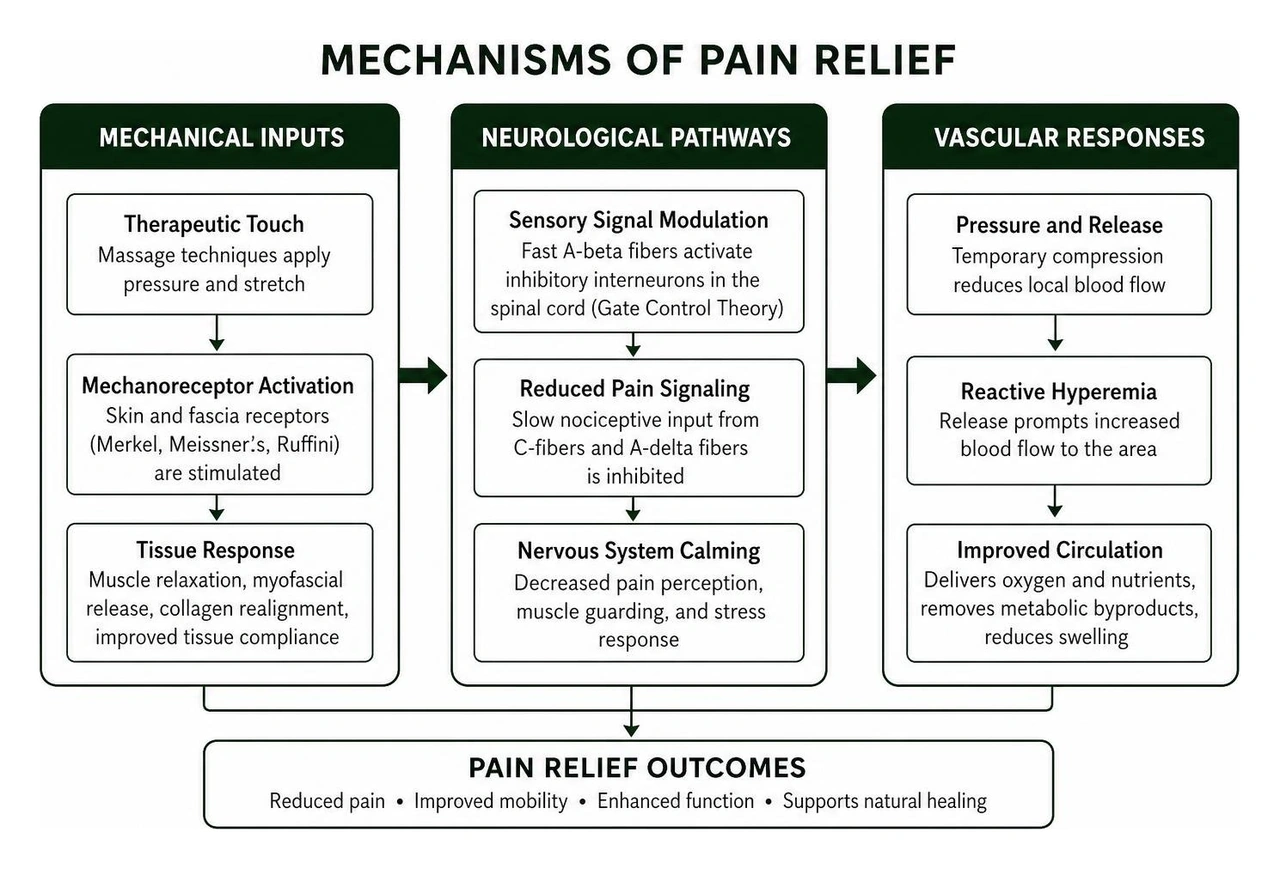
Neurological Gate Control and Nervous System Calming
Much of massage's pain relief is explained by the Gate Control Theory of pain. Ronald Melzack and Patrick Wall first proposed it.
Here is how it works. When muscle is irritated or strained, small nerve fibers (C-fibers and A-delta fibers) carry pain signals. These signals travel up through the dorsal horn of the spinal cord to the brain.
During therapeutic touch, special touch receptors in your skin and fascia switch on. These include Merkel discs, Meissner's corpuscles, and Ruffini endings. They send fast signals along large A-beta nerve fibers. These touch signals travel much faster than slow pain signals. They activate "blocker" nerve cells in a part of the spinal cord called the substantia gelatinosa.
This closes the "gate." It keeps a large share of incoming pain messages from reaching your conscious brain.
At the same time, skilled bodywork stimulates the vagus nerve. This turns down the fight-or-flight system (sympathetic) and boosts the rest-and-digest system (parasympathetic). This shift causes:
- A noticeable drop in stress hormones like cortisol and epinephrine.
- More release of endorphins, dynorphins, and enkephalins, the body's natural opiate-like pain relievers.
- Less substance P, a brain chemical that boosts pain signals and nerve-driven inflammation.
- Lower sensitivity in muscle spindles (stretch sensors in the muscle), which releases involuntary muscle guarding.
Circulation, Metabolic Clearance, and Tissue Oxygenation
Tense muscles stay contracted for long periods. This squeezes the tiny blood vessels nearby. The squeezing cuts off local blood flow and starves muscle cells of oxygen.
Irritating waste products then build up, such as lactic acid, bradykinin, and potassium ions. These chemicals keep the local pain nerves on edge. The muscle gets stuck in a spasm-pain-spasm cycle that feeds itself.
Hands-on compression, kneading, and gentle tissue movement widen the small blood vessels right away. This boosts local blood flow. The flush restores oxygen to cells, balances tissue pH, and clears out built-up inflammatory chemicals.
Supporting fascial hydration also matters. Well-hydrated connective tissue keeps its glide and stretch. This prevents friction between neighboring muscle layers and protects against repeated small strains.
Clinical Bodywork vs. Spa Relaxation: Choosing Targeted Care
If you want long-term relief from muscle and joint pain, it helps to know the difference between spa massage and clinical bodywork.
A Swedish massage at a resort or day spa offers a wonderful escape from daily stress. Its main goal is general relaxation and better circulation. Therapists follow the same full-body routine using light-to-moderate sweeping strokes. They rarely spend much time on complex joint or muscle problems.
Clinical massage therapy is different. It is a results-driven treatment based on assessment. Before your therapist begins, they will:
- Take a full medical history
- Check your posture and alignment
- Test how far your joints move, both on their own and with help
- Run specific orthopedic tests to find what is driving your pain
Instead of a one-size-fits-all routine, the session focuses on faulty movement patterns, body imbalances, and the specific tissues keeping your symptoms going.
When deciding between relaxation massage vs clinical massage, consider these differences:
- Treatment Focus: Spa bodywork aims for full-body stress relief. Clinical bodywork targets specific movement problems, posture strain, and injured tissue.
- Assessment Protocols: Clinical sessions include movement checks before and after treatment, gait (walking) analysis, and hands-on assessments. These track real gains in joint range of motion.
- Technique Integration: Clinical therapists blend deep tissue stripping, fascia stretching, nerve-muscle retraining, and trigger point release. They adjust based on how your tissue responds in real time.
- Continuity of Care: Clinical therapy follows a structured plan with clear milestones. Techniques change over several visits to support lasting tissue change.
Designing an Effective Treatment and Recovery Protocol
Treating only the symptom rarely brings lasting relief. Take chronic low back pain. The real cause is often not your lower spine at all. It could be:
- Tight hip flexors tilting your pelvis forward
- Weak, inactive glute muscles that fail to steady your hips
- Stiff ankles that limit upward bending (dorsiflexion) and change how you walk
Your body naturally creates workaround movement patterns to avoid hurt or painful areas. Over time, tension moves along the chain of linked muscles and joints. Understanding why pain keeps coming back means treating both the tight tissue and the faulty movement habits that caused it.
Pairing targeted soft tissue release with corrective exercise makes sure newly lengthened muscles are backed by active, trained control.
Structuring a Pain Relief Massage Plan for Long-Term Recovery
Tissue repair and retraining your nervous system follow natural timelines. One session can break up spasms and bring real short-term relief. But lasting recovery needs a planned, step-by-step schedule:
- Acute Relief Phase (Weeks 1–3): For severe flare-ups or recent strains, plan on 1 to 2 sessions per week. The focus is reducing inflammation, easing overly tight muscles, releasing active trigger points, and calming nervous system sensitivity.
- Subacute Restoration Phase (Weeks 4–8): As everyday pain eases, visits shift to once every 1 to 2 weeks. The focus moves to breaking up deep fascia adhesions, restoring full joint movement, and adding corrective movement patterns to build strength.
- Maintenance and Performance Phase (Ongoing): Once you move well and your everyday pain is gone, monthly or bi-weekly visits keep tissue supple. They prevent compensating tightness and catch small movement problems before they turn into painful flare-ups.
Safety Screening, Medical Precautions, and Multimodal Care
Therapeutic massage is a very safe, drug-free therapy. Still, careful safety screening is vital before any clinical session. Therapists must screen for standard reasons to avoid or adjust massage (contraindications), which include:
- Active phlebitis, deep vein thrombosis (DVT), or severe vascular disorders.
- Acute, unmanaged systemic infections or high fevers.
- Inflamed, broken, or infected skin conditions over the target area.
- Unhealed bone fractures or immediate post-operative wound sites without medical clearance.
- Uncontrolled hypertension or complex cardiovascular instability.
For complex joint and bone cases, targeted medical massage works best as part of a team-based care plan that uses several therapies.
At Transcending Health, we often coordinate hands-on bodywork with physical therapy, chiropractic adjustments, and acupuncture. We also offer advanced non-invasive therapies like SoftWave acoustic wave therapy (shockwave), localized cryotherapy, and targeted laser treatments. This whole-person approach treats soft tissue, joints, and the body's cell repair processes at the same time.
Frequently Asked Questions About Therapeutic Musculoskeletal Care
Does a therapeutic massage need to be painful to work?
No. The old idea of "no pain, no gain" works against you in clinical bodywork. Therapeutic techniques may create an intense, local feeling often called a "good hurt" or a productive release. But sharp pain that makes you hold your breath triggers a protective stretch reflex.
When pressure goes past what your body can handle, your nervous system reads the touch as a threat. The muscles around it then tighten and guard against the therapist's hands. Good bodywork works with your nervous system. It uses firm pressure and ongoing communication so tissues can melt without defensive tension.
How many sessions are typically needed to resolve persistent muscle pain?
The number of sessions depends on whether your problem is new (acute) or long-lasting (chronic). Your overall tissue health and lifestyle also matter. New muscle strains often improve a lot within 2 to 4 targeted sessions.
Chronic pain patterns that built up over months or years usually need more. Plan on a series of 6 to 10 sessions over two months. This gives time to release deep fascia restrictions, retrain the nervous system, and allow healthy tissue rebuilding.
Can therapeutic bodywork be integrated with other medical treatments?
Yes. Therapeutic bodywork is an excellent add-on to standard medical and rehab care. When paired with physical therapy, chiropractic adjustments, or orthopedic rehab, soft tissue release helps your joints hold their alignment. It also makes corrective exercises more comfortable and effective.
Always tell your massage therapist about any other medical treatments, medications, or post-surgery limits. Then they can tailor their approach to support your larger recovery plan.
Conclusion: Restoring Function and Lasting Comfort
Ongoing muscle aches, tight joints, and limited movement drain your energy. They keep you from the active life you deserve.
Pain relief massage is not a short-term luxury. It is a proven, evidence-based hands-on therapy. It calms overactive pain nerves, restores blood flow in tiny vessels, unwinds deep fascia restrictions, and retrains faulty movement patterns.
A whole-person, clinical approach to recovery can help you break the tiring cycle of chronic guarding. You can rediscover what it feels like to move with ease, strength, and confidence.
At Transcending Health, we help our Central Virginia community find lasting comfort and their best physical function through personal, integrative care. You might be recovering from a sports injury, dealing with posture strain from desk work, or looking for relief from long-standing pain. Whatever brings you in, our clinical team is here to support every step of your recovery.
Ready to experience the benefits of specialized massage therapy in Charlottesville? We invite you to take the next step. Book your personal clinical session through our online schedule at https://www.transcendinghealth.net/appointment-calendar.